
Mental Health Is Athletic Health

May is Mental Health Awareness Month. And in sports, that means something specific.
It means acknowledging that the athlete sitting across from you in the locker room, the one who looks fine, trains hard, and never says a word about how they are feeling, may be carrying something invisible that no conditioning program, no film session, and no coaching adjustment is equipped to address.
It means being honest about the fact that up to 35% of elite athletes experience a mental health crisis at some point in their careers, manifesting as burnout, depression, anxiety, or some combination of all three. That nearly 29% of athletes are currently experiencing burnout symptoms. That suicide is now the second leading cause of death among high school athletes.
And it means saying, clearly and without qualification: mental health is not separate from athletic health. It is athletic health. The two have never been separate. We have just spent decades pretending otherwise.
That pretending has cost athletes enormously. This month, we are committed to changing the conversation.
THE BURNOUT PROBLEM NOBODY IS TALKING ABOUT LOUD ENOUGH
Burnout in sports is not about being tired after a hard week. It is a clinical syndrome, characterized by emotional and physical exhaustion, a growing sense of detachment from the sport, and a diminished sense of accomplishment, that builds slowly, over months and years, and often goes undetected until it becomes a crisis.
The conditions driving it are systemic. Early specialization, the pressure to commit to a single sport year-round at younger and younger ages, increases burnout risk by 70%. High-performance environments that prioritize results over recovery create chronic stress cycles that the nervous system was not designed to sustain indefinitely. And a sports culture that equates rest with weakness, and vulnerability with softness, ensures that most athletes will push through the warning signs long past the point where they should have asked for help.
Burnout causes 30% of elite athletes to retire prematurely. That is not a small number. That is nearly a third of the most talented competitors in the world, leaving the sport they love not because of injury, not because of age, but because the system around them did not recognize, or did not care, that they were running out of capacity to keep going.
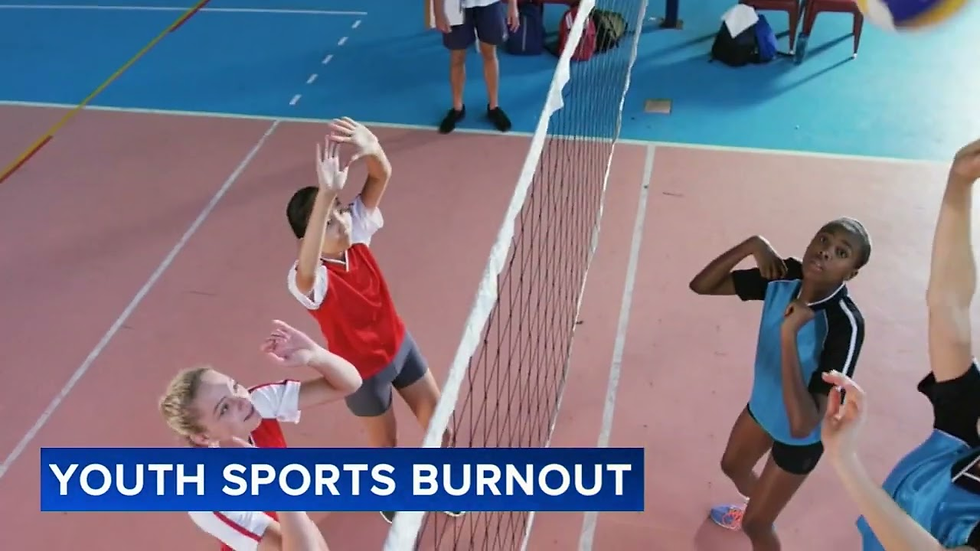
For youth athletes, the picture is equally serious. One in four youth athletes in team sports reports burnout symptoms annually. Research shows that approximately one in five young athletes already shows elevated burnout risk indicators at the beginning of a season, before it has even started. Girls and athletes in individual sports are at the highest risk, facing greater individual performance pressure and fewer opportunities for social support in their daily training environments.
This is not a performance issue. It is a health issue. And it deserves the same urgency we give to a torn ACL or a stress fracture.

THE PRESSURE NOBODY PREPARED ATHLETES FOR
Every athlete who reaches a high level has spent years being told that the pressure is the point. That embracing it, absorbing it, and performing through it is what separates the good from the great.
What most are never told is what that pressure does to the body and mind when there is no outlet, no support, and no permission to acknowledge that it is real.
65% of athletes cite intense pressure from coaches as a primary risk factor for mental health decline. Mental health disorders reduce athletic performance by up to 20% in endurance events. Depressed athletes have a 2.5 times higher injury recurrence rate than their healthy counterparts. And athletes experiencing poor mental health recover from surgery 25% more slowly.
These are not soft numbers. These are performance numbers. They speak the language of coaches, GMs, and athletic directors who need a practical reason to invest in mental health support beyond the ethical one, which should be sufficient on its own, but apparently is not always.
The irony is that the qualities that make athletes exceptional, drive, perfectionism, goal orientation, the relentless pursuit of improvement, are the same qualities that make them vulnerable to mental health challenges when those traits go unsupported. The very engine of elite performance, without the right support structure around it, can become the thing that breaks an athlete down.
That is not a character flaw. It is a systems failure.
IDENTITY AFTER SPORTS: THE CRISIS NO ONE SEES COMING
If burnout is the slow fire that burns athletes out from the inside during their careers, the identity crisis of retirement is the one that often catches them completely off guard after.
Athletic identity is built over years, sometimes decades. Practices, competitions, teammates, coaches, routines, the daily architecture of a life organized entirely around performance. And then, one day, it ends. Sometimes gradually. Sometimes suddenly. Either way, the sport that structured everything is gone, and the question left behind is one that most athletes were never given the tools to answer: who am I now?
Research shows that athletic identity drops by an average of 32% in the first three months after retirement, with mental health symptoms, depression, anxiety, and a profound sense of purposelessness, peaking during that same window. For athletes who built their entire self-concept around being an athlete, that transition is not just a career change. It is an identity collapse.
Retirement that is abrupt, forced by injury, a roster decision, or one play that changes everything, is harder than planned retirement. Athletes who had some control over when and how they left the sport fare better. Athletes who were cut, injured out, or simply ran out of contract options face the psychological equivalent of the ground disappearing beneath their feet.
And yet this is one of the least supported transitions in all of professional and amateur sport. Teams invest enormous resources in developing athletes. Almost none of those resources follow the athlete out the door when the career ends.
YOUTH ATHLETES ARE NOT IMMUNE
It would be a mistake to frame mental health in sports as primarily a professional problem. It starts much earlier than that.
The average age of anxiety onset is 11 years old. Between ages 8 and 14, girls' confidence drops by
Comments